The trial inventory
Thymosin Alpha-1 in combination treatment
The antiviral, chemotherapy or hospital care beside the peptide has to stay in the picture.
Chronic hepatitis B and the antiviral partner
The lamivudine meta-analysis published in 2009 asks a useful question about Thymosin Alpha-1: what changes when it is added to an antiviral? The combination improved virological response and reduced viral breakthrough compared with lamivudine alone. For a serious account of the molecule's clinical reputation, I would open this file first.
The background of the 2022 Cochrane review protocol summarises eight trials with 583 patients. HBeAg seroconversion occurred in 45.1% with lamivudine plus thymosin alpha-1 and 15.2% with lamivudine alone. The same background discusses better test results with thymosin alpha-1 plus entecavir in people with hepatitis B-related cirrhosis. The figures concern viral and blood-test responses; they do not establish longer life or better symptoms.
The combination is the unit that deserves scrutiny. The antiviral attacks the virus, while the peptide is investigated for its immune contribution. I temper that enthusiasm after looking at the trial base: many studies were small, open-label or concentrated in one region. A larger blinded comparison with outcomes patients can feel would earn more space in my account, alongside the virological tests.

Sepsis mortality
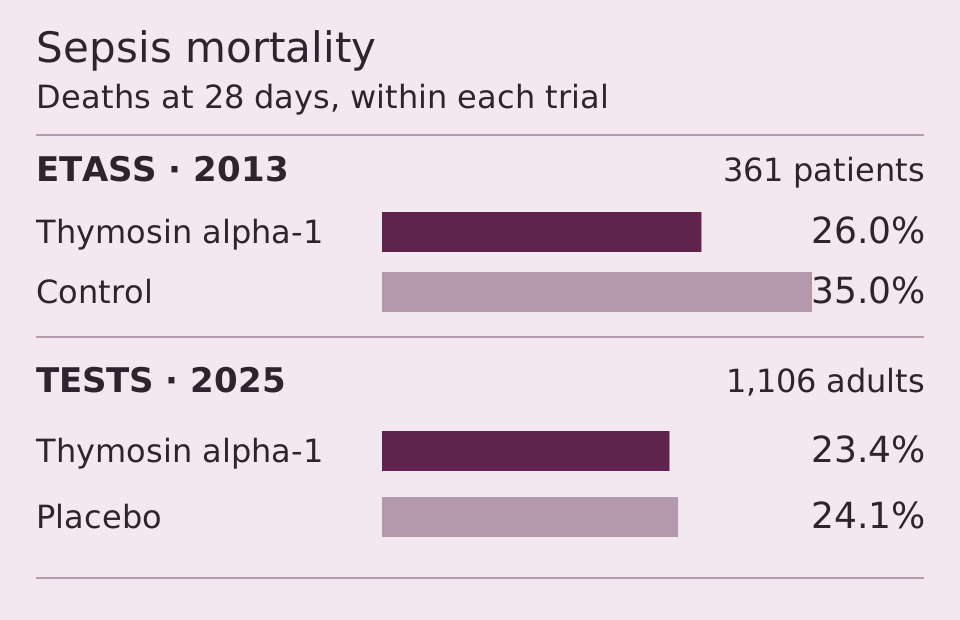
Sepsis is the life-threatening illness caused by an extreme response to infection. In ETASS, the 2013 randomised trial, 361 patients received thymosin alpha-1 or control care. Mortality at 28 days was 26.0% with the peptide and 35.0% in controls. The nonstratified analysis gave P=0.062; the log-rank analysis gave P=0.049. Those different analyses explain the hesitant language around the early result. Monocyte HLA-DR, a marker involved in presenting a target to immune cells, also improved.
The double-blind, placebo-controlled phase 3 TESTS trial followed 1,106 adults across 22 centres. Mortality at 28 days was 23.4% with thymosin alpha-1 and 24.1% with placebo, with a hazard ratio of 0.99, 95% CI 0.77–1.27 and P=0.93. It found no statistically significant mortality benefit.
I cannot give the early numerical gap the same weight after TESTS. The later trial substantially weakens the case for a survival benefit in sepsis, even though changes in immune markers remain biologically interesting.
Thymosin alpha 1 COVID-19 research
A retrospective study of 76 people with severe COVID-19 reported mortality of 11.11% among treated patients and 30.00% among the others. Blood T-cell counts increased, while PD-1 and Tim-3 expression fell on CD8+ T cells, suggesting less exhaustion. Treatment allocation was observational, so differences between the groups could have contributed to the outcome.
The laboratory work operates on another scale. Blood cells taken from COVID-19 patients showed a reduction in inflammatory cytokine release when studied outside the body. In a human blood-cell model exposed to SARS-CoV-2 stimulation, IL-6 and IL-8 fell while IL-10 increased. Those were cell experiments. They could explore a mechanism without establishing recovery or survival in patients.
The early hospital result and the cell experiments make an understandable case for further research. For a general claim about COVID-19 treatment, I need a firmer clinical comparison than those early hospital figures provide.
Cancer adjunct treatment
The 2019 reappraisal of thymosin alpha-1 in cancer therapy brings together preclinical and clinical work in melanoma, hepatocellular carcinoma and lung cancer. The proposed role is alongside chemotherapy and immunotherapy: strengthen antitumour responses and potentially reduce treatment-related immune toxicity.
An earlier review of combination treatment describes immune recovery and reduced chemotherapy toxicity in mouse experiments and human cancer studies involving interferon or interleukin-2. In lung cancer work using mice and human samples, thymosin alpha-1 reduced the accumulation of suppressive myeloid cells through reduced VEGF production. That finding offers a possible mechanism; it does not demonstrate that the peptide alone treats cancer in people.
I think the add-on question earns further investigation. It also demands an exact accounting of the other cancer treatment and of both tumour outcomes and toxicity. Replacing established care with the peptide would go beyond this evidence.